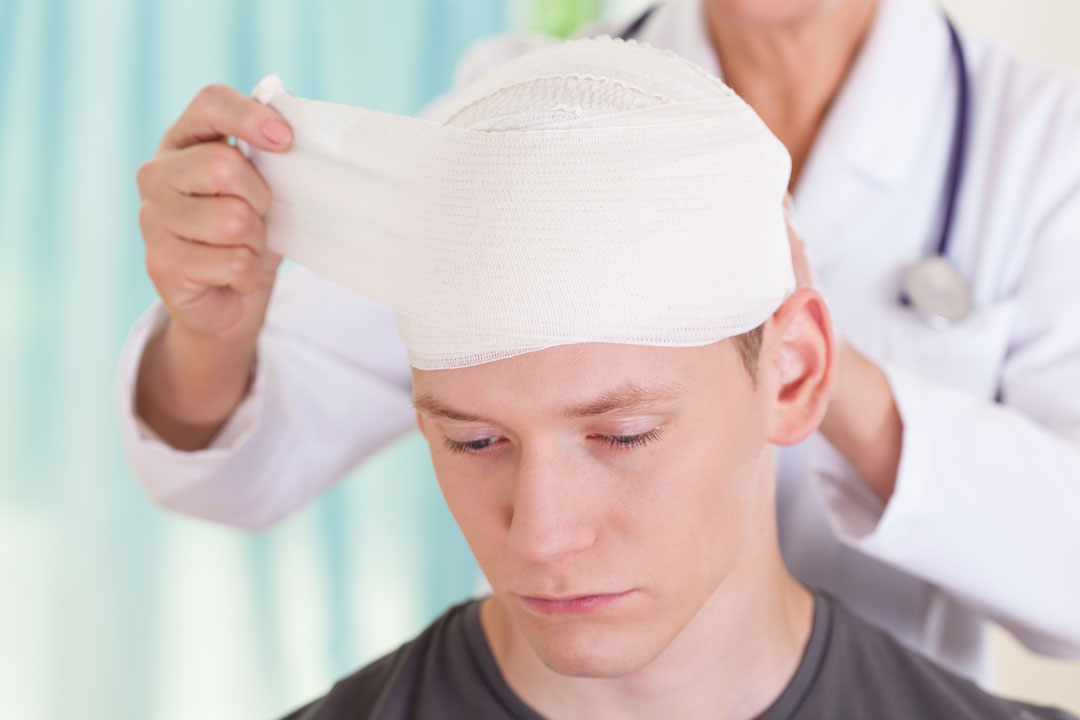
NCP of Head Injury

NCP of Head Injury

NCP of Head Injury

By Dr. Ravindra Patil

NCP means nursing care plan.

Any severe blow to the brain, skull or the scalp is considered a head injury. It ranges from a minor bump to a fractured skull.Along with the neurosurgeons and critical care specialists, nurses have a major role in managing head injury and traumatic brain injury. Nurses have a nursing care plan for managing every type of patients, and similarly they have a nursing care plan or NCP for managing head injury patients.

Table of Contents

Primary Goal

  • The primary goal of nursing care plan head injury is to maintain adequate blood supply and improve cerebral blood flow in order to prevent cerebral ischaemia and secondary injury to the brain.
  • The intracranial pressure of CSF must also be under control.
  • Blood oxygen and CO2 saturation must be maintained in every nursing care plan of head injury.
  • Nursing care plan on head injury must ensure that the patient has no seizures.
  • If the patient is unconscious, the NCP for unconscious patient will come into play.

Nursing Diagnosis

Nurses have their own head injury nursing diagnosis. While surgeons operate and physicians decide the medicines, a proper nursing care plan of head injury helps administer medicines and take due patient care. Remember, a critically ill head injury patient needs constant care from his or her head to his or her toes. For a nurse, the head injury is a just one part.

In head injury nursing management, most important is general nursing care which includes eye care, hair care, nail care, intubation and ventilator care, urinary catheter care, intravenous lines care, central line care, feeding and feeding tube care and so on. Over and above all this the nurse will care for the head injury with her nursing care plan for head injury.

If a patient is unable to move or is unconscious, he/she has to be turned over every two hours to prevent pressure sores. Such patients are on diapers and the diapers need to be changed and the area sponged and cleaned. The patient’s body must be sponged at least once or twice a day. Head injury nursing management also includes urinary catheter care.o.

Raised Intracranial pressure [ICP]

Because of various reasons, the pressure of the cerebrospinal fluid [CSF] may increase in head injury patients. The patient will have an optimal cerebral tissue perfusion only with a normal ICP. To maintain normal ICP, in every nursing care plan for head injury, the nurse will monitor the patient’s neurological status by checking the pupils, Level of Consciousness [LOC] and Glasgow Coma Scale [GCS] scores continuously.

Remember, it is the nursing staff who is with the patient 24×7. Only the nurses can observe such changes and report them to the physician, who in turn can take appropriate action.

Any changes in vital signs may be a sign of increased pressure in the brain. An increased ICP causes slowing heart rate, a widening pulse pressure, and irregular respiration.

Every nursing care plan on head injury will check for fluid leakage from the ears and nose. Leakage of a clear liquid from the nose (rhinorrhoea) and ears (otorrhea) might be the cerebrospinal fluid leaking after head injury caused by fractures. Because there is no accumulation of fluid in the brain, there might be no signs of raised ICP.

O2 and CO2 Levels

In a typical ICU patient’s file will be written:

“Keep PO2 between 80 and 100 mmHg and PCO2 between 35 and 38 mmHg.”

These are levels of blood oxygen and carbon-dioxide which are to be maintained by the oxygen administered through nasal prongs, mask, or a tube inside the trachea, a process called “Intubation”. When a patient is intubated, a machine called the “ventilator” controls the patient’s breathing.

In every NCP of head injury, the goal is to prevent prolonged states of hypoxemia (decreased blood level of oxygen) and hypercarbia (increased amount of carbon dioxide). 

Besides all that, look after…

A competent ICU nurse’s nursing management of head injury will avoid any activities and symptoms that increase ICP. They are:

  • Keep patient’s head straight
  • Do endotracheal suctioning
  • Prevent patient’s coughing, vomiting
  • Head injury nursing management must prevent bending at the waist
  • Reduce Pain
  • Prevent Fever
  • Don’t allow shivering in the patient

In a good nursing care plan of head injury, although it is essential, it is good to limit suctioning and do hyperoxygenation before suctioning to help keep ICP at bay.

Intracranial monitoring system

Head injury nursing management may have equipment to measure ICP continuously. An ICP that is greater than 15 mmHg should be reported right away.

A nurse must administer medication as ordered to decrease ICP. Medicines used to reduce ICP are:

  • Hyperosmotic agents (Mannitol)
  • Steroids
  • Barbiturates
  • Antipyretics
  • Muscle relaxants
  • Anticonvulsants

Thus, all the above types of medicines are a vital necessity in a nursing care plan for head injury.

Control Seizures

Seizures are caused by many reasons, some of which are:

  • Intracranial Bleeding
  • Contusion
  • Hyponatremia
  • Open and closed brain injuries
  • Hypoxia
  • Protect the patient’s airway during seizure activity.

Every nurse trained in a nursing care plan on head injury must know how to look the above. A good nurse must have her own head injury nursing diagnosis. The above characteristics of seizures must be noted by nurses and recorded:

The worst that can happen during head injury nursing management is patient’s self-injury. To prevent injuries, do this:

  • Reduce disturbance
  • Pad side rails of the patient’s bed
  • Place the bed in the lowest position
  • Provide head protection by extra pillows

Every nursing care plan of head injury must assist the patient during the seizure by:

  • Turning the patient’s head to the side
  • Suctioning if necessary

These measures protect the patient’s airway during and after the seizure.

Anticonvulsants medicines must be given as ordered. Phenytoin is given as an anti-seizure medicine. But it requires close monitoring or toxicity may occur.

Acute Confusion due to increased ICP

ICU nursing care plan for head injury includes very close constant monitoring of the patient’s consciousness. The nurse must check for:

  • Assess the patient’s level of consciousness frequently as ordered.
  • A change in mental status might indicate an increase in ICP.
  • Reorient the patient to person, time, place, and situation frequently.

Memory might be affected. Hence requires frequent repetition of the same information. Informing the patient about their situation might reduce anxiety levels and bring their cognitive status back to baseline.

Talk to the patient

Only in the NCP for unconscious patient will communication with the patient be not be possible. Otherwise in every nursing care plan for head injury, the nurse must talk to the patient often and explain things in short and simple sentences before and throughout the process. Also;

  • Promote continuity of care.
  • A good nursing care plan of head injury will prevent frequent changes in staff
  • Don’t change environment as it might further worsen the patient’s confused state.
  • If possible, have the family communicate with the patient via a smartphone.
  • Seeing familiar faces and recognizing familiar voices might stimulate memory and help with reorientation.

Deficient Knowledge, Difficult Healing

No patient knows about his head injury. Hence head injury patients are very, very confused. It is a sudden event. Hence the nursing care plan on head injury must factor this in.

Brain injury might affect short-term memory and cause behaviour and mood changes.  Ability to focus and learn new information might be difficult and take more time. Most patients and families have no prior experience with head trauma injuries. In most cases, head injuries arise from very sudden and unexpected events.

Managing the relatives

Whatever good care is taken, it must be communicated to the patients and family members daily. Family members and caregivers are a vital part of the healthcare team.

Head injury nursing management will prepare the patient and family for the need for physical therapy, occupational therapy, speech therapy and home nursing care. This does not raise expectations greatly and helps the family adjust themselves to the new situation.

All in all, along with the surgeon, only a good head injury nursing care plan implemented by committed nurses will make the head injury patient better.

And at Samarth Neuro and Superspeciality Hospital, run by neurosurgeon Dr. Ravindra Patil, this combination of a competent neurosurgeon and the best nursing care is accessible around-the-clock.

Special Note

In the above essay, nurses are mentioned as women only for the sake of convenience. Male nurses are also equally dedicated and capable.

डोक्याला दुखापत झालेल्या रूग्णाची नर्सिंग काळजी

डोक्याला दुखापत झालेल्या रूग्णाची नर्सिंग काळजी

डोक्याला दुखापत झालेल्या रूग्णाची नर्सिंग काळजी

By Dr. Ravindra Patil

कोणत्याही रूग्णाच्या उपचारात डॉक्टरांइतका, कदाचित डॉक्टरांहूनही जास्त, नर्सेसचे (परिचारिकांचे) योगदान असते. कारण नर्सेस सतत रूग्णाच्या बरोबर असतात.

नर्सेस कोणत्याही रूग्णाची काळजी घेतांना एक प्लॅन बनवतात. याला नर्सिंग केर प्लॅन असे म्हणतात. डोक्याला गंभीर इजा असलेल्या रूग्णांसाठी पण नर्सेसचा नर्सिंग केर प्लॅन असतो. पाहूया अशा गंभीर परिस्थितीत असलेल्या रोग्यांची परिचारिका किंवा नर्सेस कशी काळजी घेतात.

Table of Contents

डोक्याची गंभीर इजा (हेड इन्जुरी) म्हणजे नक्की काय

मेंदू, कवटी किंवा टाळूला कोणताही गंभीर आघात हा डोक्याची दुखापत मानली जाते.अशा इजा किरकोळ धक्क्यापासून फ्रॅक्चर झालेल्या कवटीपर्यंत असतात. न्यूरोसर्जन आणि क्रिटीकल केर तज्ञांसोबत, हेड इन्जुरी आणि मेंदूला झालेल्या दुखापतीची काळजीघेण्यात परिचारिकांची प्रमुख भूमिका असते. प्रत्येक प्रकारच्या रूग्णांचे व्यवस्थापन करण्यासाठी परिचारिकांकडे नर्सिंग केअर योजना असते आणि त्याचप्रमाणे त्यांच्याकडे डोक्याला दुखापत झालेल्या रूग्णांचे व्यवस्थापन करण्यासाठी नर्सिंग केअर योजना किंवा NCP असते.

प्राथमिक ध्येय

  • सेरेब्रल इस्केमिया(रक्त पुरवठा बंद होणे) आणि मेंदूला होणारी दुय्यम इजा टाळण्यासाठी मेंदूत पुरेसा रक्तपुरवठा राखणे आणि सेरेब्रल रक्त प्रवाह सुधारणे हे नर्सिंग केअर प्लॅनचे मुख्य उद्दिष्ट आहे.
  • सेरेब्रोस्पायनल फ्लुइड (सी.एस.एफ.) चा इंट्राक्रॅनियल (कवटीच्या आतील) दबाव वाढू न देणे.
  • डोक्याच्या दुखापतीच्या प्रत्येक नर्सिंग काळजी योजनेमध्ये रक्तातील ऑक्सिजन आणि कार्बन-डायऑक्सइडच्या मात्रा योग्य प्रमाणात राखल्या पाहिजेत.
  • डोक्याच्या दुखापतीमुळे रुग्णाला कोणतेही दौरे येत नाहीत इकडे नर्सिंग केअर प्लॅनमध्ये विशेष लक्ष देण्यात येते.
  • जर रुग्ण बेशुद्ध असेल, तर बेशुद्ध रुग्णासाठी वेगळा “नर्सिंग केर प्लॅन” वापरण्यात येईल.

नर्सिंग निदान

डॉक्टर निदान करतात त्याच प्रकारे परिचारिकांचे पण “नर्सिंग निदान”असते. शल्यचिकित्सक ऑपरेट करत असताना आणि डॉक्टर औषधे ठरवत असताना, परिचारिकाडोक्याच्या दुखापतीची योग्य नर्सिंग काळजी योजना आखतात, औषधे व्यवस्थापित करतात आणि रुग्णाची योग्य काळजी घेण्यास मदत करतात. लक्षात ठेवा, गंभीरपणे आजारी असलेल्या डोक्याला दुखापत झालेल्या रुग्णाची त्याच्या डोक्यापासून ते त्याच्या पायाच्या बोटांपर्यंत अशी त्याच्या अख्ख्या शरीराची सतत काळजी घ्यावी लागते. नर्ससाठीडोक्याची दुखापत हा फक्त एक छोटा भाग आहे.

हेड इन्जुरी नर्सिंग मॅनेजमेंटमध्येसर्वात महत्वाचे असते सामान्य नर्सिंग केअर. यामध्ये डोळ्यांची काळजी, केसांची काळजी, नखांची काळजी, इंट्यूबेशन आणि व्हेंटिलेटर केअर, युरिनरी कॅथेटर केअर, इंट्राव्हेनस लाईन्स केअर, सेंट्रल लाइन केअर, फीडिंग आणि फीडिंग ट्यूब केअर इत्यादींचा समावेश होतो.हे सर्व संभाळून नर्स डोक्याच्या दुखापतीची पण तिच्या नर्सिंग केअर प्लॅन मध्ये योग्य काळजी घेईल.

जर एखादा रुग्ण हालचाल करू शकत नसेल किंवा बेशुद्ध असेल, तर त्याला “प्रेशर सोर्स”(हालचाल नसल्याने व सतत दाबाने कातडी घासली जाऊन आतले मास दिसणे)  टाळण्यासाठी दर दोन तासांनी एक कुशीवरून दुसर्‍या कुशीवर उलटावे लागते. जे रुग्ण डायपरवर आहेत त्यांचे डायपर बदलणे आवश्यक असते आणि तिथला भाग स्पंज करून स्वच्छ करणे आवश्यक असते. रुग्णाच्या आख्ख्या शरीराला दिवसातून किमान एकदा किंवा दोनदा स्पंज करणे आवश्यक आहे. डोके दुखापत नर्सिंग व्यवस्थापनामध्ये मूत्र कॅथेटरची काळजी देखील समाविष्ट आहे.

वाढलेले इंट्रा क्रॅनियल प्रेशर [ICP]

विविध कारणांमुळे, डोक्याला दुखापत झालेल्या रुग्णांमध्ये सेरेब्रोस्पाइनल फ्लुइड [CSF] चा दाब वाढू शकतो. रुग्णाच्या मेंदूला आदर्श परिस्थिती म्हणजे नॉर्मल इंट्रा क्रेनियल प्रेशर, जेव्हा सेरेब्रल टिश्यू परफ्यूजन इष्टतम असते.ICP नॉर्मल राखण्यासाठीडोक्याच्या दुखापतीच्या प्रत्येक नर्सिंग केअर प्लॅनमध्ये, नर्स रुग्णाची न्यूरोलॉजिकल स्थिती, चेतनेची पातळी [शुद्ध] आणि ग्लासगो कोमा स्केल [GCS] स्कोअर यांचे सतत निरीक्षण करेल.

लक्षात ठेवा, फक्त नर्सिंग स्टाफच रुग्णासोबत 24×7 असतो. केवळ परिचारिकाच अशा बदलांचे निरीक्षण करू शकतात आणि डॉक्टरांना ही माहिती देऊ शकतात. ते बघून डॉक्टरयोग्य कारवाई सुरू करू शकतात.

महत्त्वाच्या लक्षणांमधील कोणतेही बदल हे मेंदूतील दबाव वाढण्याचे लक्षण असू शकतात. वाढलेल्या इंट्रा क्रेनियल प्रेशरमुळे हृदय गती मंदावते, नाडीचा दाब वाढतो आणि श्वासोच्छ्वास अनियमित होतो.

डोक्याच्या दुखापतीवरील प्रत्येक नर्सिंग काळजी योजना कान आणि नाकातून द्रव गळतीची तपासणी करतेच. कारण कवटीच्या फ्रॅक्चरमुळे डोक्याला दुखापत झाल्यानंतर नाकातून सेरेब्रोस्पायनल फ्लुइडचा द्रव बाहेर पडणे (राइनोरिया) आणि कानातून पडणे (ओटोरिया) असे होऊ शकते. अशा गळती मुळे मेंदूमध्ये द्रवपदार्थ साचत नसल्यामुळे, सेरेब्रोस्पायनल फ्लुइडचा दाबवाढूनही तो वाढल्याची चिन्हे दिसत नाहीत.

O2 आणि CO2 पातळी

कुठल्याही ICU मध्ये रुग्णाच्या फाईल मध्ये असे लिहिलेले असेल:

“PO2 80 आणि 100 mmHg या मध्ये आणि PCO2 35 आणि 38 mmHg या दरम्यान ठेवा.”

हे रक्तातील ऑक्सिजन आणि कार्बन-डायऑक्साइडचे स्तर आहेत. ते रूग्णाला नाकातून नळ्या लावून, मास्क लावून किंवा श्वासनलिकेच्या आत असलेल्या नळीद्वारे देण्यात येणार्‍या ऑक्सिजनद्वारे राखले जातात. तोंडातून किंवा गळ्यावर भोक पाडून श्वास नलिकेत नळी घालायच्या प्रक्रियेला “इंट्युबेशन” म्हणतात. जेव्हा एखाद्या रुग्णाला इंट्यूबेट केले जाते तेव्हा नळीच्या दुसर्‍या टोकाला “व्हेंटिलेटर” नावाचे मशीन रुग्णाच्या श्वासोच्छवासावर नियंत्रण ठेवते.

डोक्याच्या दुखापतीच्या प्रत्येक नर्सिंग केअर प्लॅन मध्ये, हायपोक्सिमिया (रक्तातील ऑक्सिजनची घटलेली पातळी) आणि हायपरकार्बिया (कार्बन डायऑक्साइडचे वाढलेले प्रमाण) यांचे दीर्घकाळापर्यंत नियंत्रण करणे हे लक्ष्य असते.

त्याशिवायच्याइतर अनेक बाबी…

सक्षम ICU परिचारिकेचे हेड इन्जुरी नर्सिंग व्यवस्थापन कशाही प्रकारे इंट्रा क्रेनियल प्रेशर (ICP) वाढू देणार नाहीत. ते करण्यास खालील गोष्टी करण्यात येतात:

  • रुग्णाचे डोके सरळ ठेवा
  • एंडोट्रॅकियल सक्शन करा
  • रुग्णाचा खोकला, उलट्या थांबवा
  • डोके दुखापत नर्सिंग व्यवस्थापनात रूग्णाला कंबरेत वाकू देणे प्रतिबंधित आहे
  • वेदना कमी करा
  • ताप टाळा
  • रुग्णाला थरथर कापू देऊ नका

डोक्याच्या दुखापतीच्या चांगल्या नर्सिंग केअर योजनेत गळ्यातून सक्शन मर्यादित प्रमाणात करतात आणि सक्शन करण्यापूर्वी हायपरऑक्सिजनेशन करणे आवश्यक असते.

इंट्राक्रॅनियल मॉनिटरिंग सिस्टम

डोके दुखापत नर्सिंग व्यवस्थापनाकडे सतत ICP मोजण्यासाठी उपकरणे असू शकतात. 15 mmHg पेक्षा जास्त ICP असेक तर लगेच डॉक्टरांना कळवणे आवश्यक असते.

ICP कमी करण्याच्या आदेशानुसार परिचारिकाने औषधोपचार करणे आवश्यक आहे. ICP कमी करण्यासाठी वापरलेली औषधे आहेत:

  • हायपरस्मोटिक एजंट (मॅनिटोल)
  • स्टिरॉइड्स
  • बार्बिट्युरेट्स
  • अँटीपायरेटिक्स
  • स्नायू शिथिल करणारी औषधे
  • अँटीकन्व्हल्संट्स

अशाप्रकारे, वरील सर्व प्रकारची औषधे डोक्याच्या दुखापतीच्या नर्सिंग केअर प्लॅनमध्ये एक अत्यावश्यक घटक असतात.

जप्ती नियंत्रित करा

जप्तीचे दौरे अनेक कारणांमुळे होतात, त्यापैकी काही खालीलप्रमाणे आहेत:

  • इंट्राक्रॅनियल रक्तस्त्राव
  • कवटीच्या आत मेंदूची इजा
  • हायपोनेट्रेमिया
  • उघड्या आणि बंद मेंदूच्या दुखापती
  • हायपोक्सिया
  • जप्तीदरम्यान रुग्णाच्या श्वासमार्गाचे रक्षण करा.

डोक्याच्या दुखापतीवर नर्सिंग केअर प्लॅनप्रमाणे कार्य करणार्या प्रत्येक प्रशिक्षित परिचारिकेला वरील गोष्टी कशा तपासाव्या हे माहित असणे आवश्यक आहे. कोणत्याही सक्षम नर्सला डोक्याच्या दुखापतीचे नर्सिंग निदान करता येणे अति आवश्यक असते.जर जप्तीची वरील वैशिष्ट्ये परिचारिकांनी लक्षात घेतली पाहिजेत आणि रेकॉर्ड केली पाहिजेत:

डोके दुखापत नर्सिंग मॅनेजमेंट दरम्यान घडणारी सर्वात वाईट गोष्ट म्हणजे रुग्णाची स्वत: ची दुखापत. ते टाळण्यासाठी, हे करा:

  • रूग्णाला कोणत्याही प्रकारचा त्रास होऊ देऊ नका
  • रुग्णाच्या पलंगाच्या साइड रेलना पॅडींग करा
  • बेडची उंची कमी ठेवा
  • जास्त उशांद्वारे डोक्याला इजा होऊ देऊ नका

डोक्याच्या दुखापतीच्या प्रत्येक नर्सिंग केअर प्लॅनमध्ये रुग्णाला जप्ती दरम्यान मदत करणे आवश्यक आहे. त्यासाठी:

  • रुग्णाचे डोके बाजूला वळवणे
  • आवश्यक असल्यास सक्शन करणे

हे उपाय जप्ती दरम्यान आणि नंतर रुग्णाच्या वायुमार्गाचे संरक्षण करतात.

अँटीकॉन्व्हल्संट औषधे सूचने प्रमाणे दिली पाहिजेत. फेनिटोइन हे जप्तीविरोधी औषध म्हणून दिले जाते. परंतु यासाठी रूग्णचे सूक्ष्म निरीक्षण आवश्यक आहे, नाहीतर विपरीत परिणाम होऊ शकतो.

ICP वाढल्यामुळे तीव्र मानसिक गोंधळ

डोक्याच्या दुखापतीसाठी आयसीयू नर्सिंग केअर योजनेमध्ये रुग्णाच्या चेतनेचे सतत आणि सूक्ष्म निरीक्षण जरूरी असते. नर्सने हे सर्व तपासले पाहिजे:

  • आदेशानुसार वारंवार रुग्णाच्या चेतनेच्या पातळीचे मूल्यांकन करा.
  • मानसिक स्थितीतील बदल ICP मध्ये वाढ दर्शवू शकतो.
  • रुग्णाला व्यक्ती, वेळ, ठिकाण आणि परिस्थिती या विषयी वारंवार सांगा.

रुग्णाच्या स्मरणशक्तीवर दुष्परिणाम होऊ शकतो. त्यामुळे सामान्य माहितीची वारंवार पुनरावृत्ती करणे आवश्यक आहे. रुग्णाला त्यांच्या परिस्थितीबद्दल माहिती दिल्यास त्याची चिंता कमी होऊ शकते आणि त्यांची संज्ञानात्मक स्थिती पुन्हा योग्य पातळीवर येऊ शकते.

रुग्णाशी बोला

केवळ बेशुद्ध रुग्णासाठी रुग्णाशी संवाद साधता येणार नाही. अन्यथा डोक्याच्या दुखापतीसाठी प्रत्येक नर्सिंग केअर योजनेमध्ये, परिचारिकेने रुग्णाशी अनेकदा बोलले पाहिजे आणि रुग्णावर कोणतीही प्रक्रिया करण्या पूर्वी आणि प्रक्रियेदरम्यान लहान आणि सोप्या वाक्यांमध्ये रुग्णाशी स्पष्ट संपर्क ठेवला पाहिजे. तसेच;

  • रुग्णाची सतत काळजी घेणे.
  • डोक्याच्या दुखापतीची चांगली नर्सिंग केअर योजना कर्मचाऱ्यांमध्ये वारंवार होणारे बदल न करणे. नवीन नर्स किंवा अटेन्डन्ट आले की रूग्णाचा गोंधळ उडतो.
  • वातावरण बदलू नका कारण यामुळे रुग्णाची गोंधळलेली स्थिती आणखी बिघडू शकते.
  • शक्य असल्यास, कुटुंबाला रुग्णाशी स्मार्टफोनद्वारे संवाद साधण्यास सांगा.
  • परिचित चेहरे पाहणे आणि परिचित आवाज ओळखणे हे स्मृती उत्तेजित करू शकतात आणि पुनर्स्थित करण्यात मदत करू शकतात.

कमी ज्ञान, कठीण उपचार

जसे तापाचे किंवा ब्लड प्रेशर अथवा डायाबिटीसची सर्वसामान्य लोकांना माहिती असते तशी डोक्याच्या गंभीर दुखापतीबद्दल आणि त्याच्या उपचारा बद्दल कोणत्याही रुग्णाला माहिती नसते. त्यामुळे डोक्याला दुखापत झालेले रुग्ण खूप गोंधळलेले असतात. हेड इन्जुरी ही अचानक घडलेली घटना असते. त्यामुळे डोक्याच्या दुखापतीवरील नर्सिंग केअर योजनेत हे लक्षात घेणे आवश्यक आहे.

मेंदूच्या दुखापतीमुळे अल्पकालीन स्मरणशक्तीवर परिणाम होऊ शकतो आणि वर्तन आणि मूड बदलू शकतो. लक्ष केंद्रित करण्याची आणि नवीन माहिती शिकण्याची क्षमता कठीण असू शकते आणि काहीपण शिकण्यास अधिक वेळ लागू शकतो. बहुतेक रूग्ण आणि कुटुंबांना डोक्याला झालेल्या दुखापतींचा कोणताही पूर्वीचा अनुभव नसतो. बहुतेक प्रकरणांमध्ये, डोके दुखापत अगदी अचानक आणि अनपेक्षित घटनांमुळे उद्भवते.

नातेवाईकांना सांभाळणे

जी काही चांगली काळजी घेतली जाते, ती दररोज रुग्णांना आणि कुटुंबियांना कळवली पाहिजे. कौटुंबिक सदस्य आणि परिचारिका हे आरोग्य सेवा देणार्यांचा एक महत्त्वाचा भाग आहेत.

हेड इंजरी नर्सिंग मॅनेजमेंटच्या नर्सेसनी रुग्ण आणि त्याच्या कुटुंबाची हॉस्पिटलमधून घरी गेल्यावर पुढच्या उपचाराची मानसिक तयारी करून देणे आवश्यक असते. त्यात शारीरिक उपचार (फिझियथेरपी), व्यावसायिक (ऑक्युपेशनल) थेरपी, स्पीच थेरपी आणि होम नर्सिंग केअर देणे गरजेचे असते. डोक्याच्या गंभीर इजेनंतर व ऑपरेशननंतर लगेच काही रूग्ण बरा होत नाही. पूर्ण बरे होणे अवघड असते व त्याला खूप वेळ लागतो हे रूग्ण व त्याच्या परिवाराला माहित हवे. त्या साठी त्यांची मानसिक तयारी हवी. हे केल्याने यामुळे अपेक्षा मोठ्या प्रमाणात वाढत नाहीत आणि कुटुंबाला नवीन परिस्थितीशी जुळवून घेण्यास मदत होते.

एकंदरीत, शल्यचिकित्सकासह, कुशल परिचारिकांनी अंमलात आणलेली एक चांगली डोके दुखापत नर्सिंग केअर योजना अत्यावश्यक असते आणि डोके दुखापतग्रस्त रुग्णाला बरे होण्यास खूप जरूरी असते. आणि समर्थ न्यूरो आणि सुपरस्पेशालिटी हॉस्पिटलमध्ये, न्यूरोसर्जन डॉ. रवींद्र पाटील यांनी चालवत असलेले , सक्षम न्यूरोसर्जन आणि सर्वोत्तम नर्सिंग केअरचे हे संयोजन चोवीस तास उपलब्ध आहे.

विशेष नोंद

नर्स म्हणजे फक्त स्त्रिया नसतात. पुरुषही उत्कृष्ट नर्स असतात. वरील लेखात प्रत्येक वेळी परिचारिका किंवा नर्स हे लिहिण्यास सोपे जावे म्हणून त्यांचा स्त्रीलिंगी उल्लेख केला आहे. मुलेही नर्सेस असतात आणि मुलीं इतकेच छान व कुशल काम करतात.

भारतात ब्रेन ट्यूमर शस्त्रक्रियेचाअंदाजे खर्च

ब्रेन ट्यूमर शस्त्रक्रियेचा खर्च

भारतात ब्रेन ट्यूमर शस्त्रक्रियेचाअंदाजे खर्च

By Dr. Ravindra Patil

जेव्हा ब्रेन ट्यूमरचे निदान होते, तेव्हा पहिली भीती मृत्यूची असते आणि दुसरी भीती उपचारांच्या खर्चाची असते.

ट्यूमरचे उपचार सामान्यतः तीन प्रकारचे असतात, औषधे [केमोथेरपी म्हणतात], ब्रेन ट्यूमर शस्त्रक्रिया आणि रेडिएशन थेरपी.

प्रत्येक व्यक्ती शस्त्रक्रियेशिवाय ब्रेन ट्यूमरचा उपचार घेण्याचा प्रयत्न करेल कारण प्रत्येकजण शस्त्रक्रियेला घाबरतो. होय, ब्रेन ट्यूमरवर शस्त्रक्रियेशिवाय उपचार करणे शक्य आहे, परंतु सौम्य ट्यूमरचा [कर्करोग नसलेला ट्यूमरचा] शस्त्रक्रियेद्वारेच सर्वोत्तम उपचार होतो कारण सर्जन सौम्य ट्यूमर पूर्णपणे काढून टाकू शकतो.

ब्रेन ट्यूमरवर शस्त्रक्रियेशिवाय उपचार करणे खूप आकर्शक आहे. कारण त्यात कवटी कापून शस्त्रक्रियेची जरूर नसते. कवटी कापतांना मेंदूला इजा होण्याच्या शक्यता असते ती टळते.


शस्त्रक्रियेशिवाय ब्रेन ट्यूमरचे उपचार कोणत्या प्रकारचे आहेत?

Table of Contents

केमोथेरपी

ब्रेन ट्यूमरवर शस्त्रक्रियेशिवाय औषधाच्या उपचारांना केमोथेरपी म्हणतात. यात ब्रेन ट्यूमर पेशी नष्ट करण्यासाठी कर्करोगविरोधी (सायटोटॉक्सिक) औषधे वापरते. पण लक्षात ठेवा, औषधे इन्जेक्शनने टोचली किंवा तोंडी घेतली तरी ती तुमच्या शरीरात रक्तप्रवाहात फिरतात. अशा प्रकारे सायटोटॉक्सिक औषधे शरीराच्या इतर भागांना हानी पोहोचवू शकतात. याशिवाय, काही केमोथेरपी औषधांनी मेंदूच्या गाठींवर उपचार करणे कठीण होऊ शकते कारण औषधे “रक्त मेंदूचा अडथळा” (blood brain barrier) नावाचा अडथळा ओलांडू शकत नाहीत.


केमोथेरपी उपचारांचा एक कोर्स 6-12 महिने टिकू शकतो, ज्यामध्ये 6-12 चक्रे असतात. रुग्णांना दर काही आठवड्यांनी, काही दिवस केमोथेरपी दिली जाते.

रेडिएशन थेरपी

यात तीन मुख्य प्रकारचे उपचार आहेत. तुम्हाला एकापेक्षा जास्त प्रकारच्या उपचारांची आवश्यकता असू शकते.

  • पहिला प्रकार म्हणजे बाह्य बीम रेडिएशन थेरपी (EBRT) आहे. या प्रकारातएक मशीन ट्यूमरमध्ये उर्जेचे किरण पाठवते. हे उपचार सामान्यतः दर रोज देतात व काही आठवडे चालतात.
  • अंतर्गत विकिरण (ब्रेकीथेरपी). याला इंटरस्टिशियल थेरपी देखील म्हणतात. किरणोत्सर्गाच्या लहान बिया थोड्या काळासाठी ट्यूमरच्या आत किंवा जवळ ठेवल्या जातात. काही प्रकारच्या उपचारांमध्ये बिया काढून टाकाव्या लागतात.
  • गामा चाकू (knife) विकिरण. यामध्ये गामा किरण नावाच्या रेडिएशन बीमचा वापर केला जातो. किरण मशीनमधून पाठवले जातात आणि एकाच वेळी शेकडो कोनातून ट्यूमरवर केंद्रित केले जातात. उपचार सहसा एकदाच करावा लागतो. पण याच्यात कोणताही खरा चाकू नसतो.गामा किरणांच्या अचूक हॅमरिंगमुळे कदाचित हे नाव दिले गेले आहे: गामा चाकू (knife).

ब्रेन ट्यूमर ऑपरेशन

अर्थातच सौम्य [कर्करोग नसलेल्या] ब्रेन ट्यूमरमध्ये उपचारांचा हा मुख्य आधार आहे. ट्यूमर काढून टाका आणि रोग विसरा.

परंतु बर्‍याच प्रकरणांमध्ये ब्रेन ट्यूमरवर उपचार करण्यासाठी तीन्ही प्रकारचे उपचार वापरले जातात. सर्जन ट्यूमर काढून टाकतो, रेडिएशन ऑन्कोलॉजिस्ट कोणत्याही अवशिष्ट ट्यूमर पेशींवर उपचार करण्यासाठी रेडिएशन देतो आणि वैद्यकीय ऑन्कोलॉजिस्ट कोणत्याही कर्करोगाच्या पेशी पूर्णपणे नष्ट करण्यासाठी कर्करोग-विरोधी सायटोटॉक्सिक औषधे देतात.

कुठे होते ब्रेन ट्यूमर शस्त्रक्रिया?

ब्रेन ट्युमरच्या शस्त्रक्रिया फक्त मोठ्या शहरांमध्ये आणि मोठ्या कॉर्पोरेट हॉस्पिटलमध्येच करता येतात हे उघड आहे. अशा रुग्णालयांमध्ये सर्वोत्तम उपकरणे आणि सर्वोत्तम डॉक्टर एकाच छताखाली असतात. पण ते खूप पैसे घेतात. भारतात किंवा कोठेही मेंदूच्या शस्त्रक्रियेचा खर्च नेहमीच जास्त असतो. पण त्यासाठी कारणे आहेत.

ब्रेन ट्यूमरच्या उपचारांसाठी अनेक निदानात्मक चाचण्या कराव्या लागतात. सीटी स्कॅन, एमआरआय स्कॅन आणि पीईटी स्कॅन सारखी इमेजिंग आवश्यक आहे. मग ब्रेन ट्यूमर ऑपरेशनसाठी खूप महाग उपकरणे लागतात. ऑपरेशन थिएटर मध्ये खास HEPA फिल्टर्स आणि लॅमिनार एअरफ्लो बसवलेले असतात.

ब्रेन सर्जरी ऑपरेशन थिएटरमधील उपकरणांमध्ये ऑपरेशन थिएटर लाइट्स, ऑपरेशन थिएटर टेबल, ऍनेस्थेसिया ट्रॉली आणि याशिवाय स्टिरिओटॅक्टिक फ्रेम, सर्जिकल नेव्हिगेशन आणि इमेजिंग स्क्रीन असणे आवश्यक आहे. CUSA [Cavitronic Ultrasonic Surgical Aspirator] सारखी विशेष उपकरणे आवश्यक असू शकतात, जे पुन्हा खर्चात भर घालतात.

ब्रेन ट्यूमर ऑपरेशननंतर बरे होण्यासाठी काही दिवसांसाठी अतिदक्षता विभाग [ICU] मध्ये रोग्याला ठेवणे आवश्यक आहे. नंतर रुग्णाला हॉस्पिटलच्या स्पेशल खोलीत हलवले जाऊ शकते. त्याला/तिला सामान्य वॉर्डमध्ये ठेवता येत नाही कारण ब्रेन ट्यूमरच्या रूग्णांना विशेष काळजीची आवश्यकता असते. सांगायचा उद्देश हा की या सर्वांमुळे खर्च वाढत जातो.

ब्रेन ट्यूमरच्या ऑपरेशननंतर फिजिओथेरपी आवश्यक आहे. प्रशिक्षित फिजिओथेरपिस्टच्या देखरेखीखाली योग्य सौम्य व्यायामाने कार्यात्मक पुनर्प्राप्ती हळूहळू प्राप्त करणे आवश्यक आहे.

कधीकधी स्पीच थेरपीची (बोलण्याचे प्रशिक्षण) आवश्यकता असू शकते. ऑक्यूपेशनल थेरपीची आवश्यकता असू शकते.

कधीकधी इम्प्लांट किंवा उपकरणे कवटीत किंवा मेंदूमध्ये टाकली जातात आणि ती कायमस्वरूपी मेंदूमध्येच राहतात. अशी उपकरणे खूप महाग असतात. ते मेंदूच्या शस्त्रक्रियेच्या खर्चात भर घालतात.

शेवटी पण अतिशय महत्त्वाची गोष्ट म्हणजे, महानगर किंवा कॉस्मोपॉलिटन शहरांमधील रुग्णालये अतिशय उच्च किंमतीच्या जमीनीवर बांधलेली असतात.यामुळे पण प्रत्येक ब्रेन ट्यूमर उपचार रूग्णाच्या खर्चात वाढ होते. मुंबईसारख्या शहरात नवीन हॉस्पिटल बांधणे हे मोठ्या कॉर्पोरेट्ससाठीही अकल्पनीय आहे कारण तिथे जमिनीची किंमत अतिशय जास्त आहे.

एका छोट्या गावात चांगलं हॉस्पिटल

एखाद्या लहान शहरात जर वैद्यकीय आणि पॅरामेडिकल व्यावसायिकांची चांगली टीम असलेले एक चांगले रुग्णालय असेल तर ओव्हरहेड खर्च खूप कमी होतो.

समर्थ न्यूरो आणि सुपरस्पेशालिटीहॉस्पिटल हे महाराष्ट्राच्या दक्षिणेकडील मिरज आणि सांगली या छोट्या जुळ्या शहरांमधील कॉर्पोरेट हॉस्पिटलचे एक उत्तम उदाहरण आहे.

समर्थ न्यूरो आणि सुपरस्पेशालिटीहॉस्पिटलचे संस्थापक व प्रमुख म्हणजेसुवर्णपदक विजेते न्यूरो सर्जन डॉ. रवींद्र पाटील. ते तेथे ब्रेन ट्यूमरच्या अनेक शस्त्रक्रिया करतात. त्यांनी केलेली ऑपरेशन्सभारतात इतर कुठल्याही मोठ्या हॉस्पिटल मध्ये केलेल्या ब्रेन ट्यूमरच्या ऑपरेशन इतकीच चांगली होतात.

आणि समर्थ न्यूरो आणि सुपरस्पेशालिटीहॉस्पिटल कॉस्मोपॉलिटन किंवा महानगरांमध्ये ब्रेन ट्यूमर ऑपरेशनच्या खर्चाच्या तुलनेत खूपच कमी शुल्क आकारते.

भारतात ब्रेन ट्यूमर शस्त्रक्रियेचा खर्च लहान शहरे आणि शहरांमध्ये कमी असल्याची अनेक कारणे आहेत. हे जमिनीची कमी किंमत, कमी जमीन महसूल, शहराच्या मध्यभागी पर्यंत जाण्यास कमी अंतर आणि तुलनेने पोहोचण्यासाठी सुलभ.

डॉ. रवींद्र पाटील यांनी मोठ्या शहरांमध्ये प्रशिक्षण घेतले आणि मिरज आणि सांगली या छोट्या शहरांमध्ये स्थायिक होण्याचा निर्णय घेण्यापूर्वी त्यांनी हजारो शस्त्रक्रिया केल्या. आपल्या सहकारी नागरिकांची सेवा करणे आणि गर्दीपासून दूर जाणे हा त्यांचा उद्देश होता. पण सर्वात मोठे कारण म्हणजे त्यांनाया छोट्या टियर टू शहरांमध्ये एक शाश्वत रुग्णालय बांधता आले. अशा प्रकारे डॉ रवींद्र यांच्या शस्त्रक्रिया कौशल्यासह समर्थ न्यूरो आणि सुपरस्पेशालिटी हॉस्पिटलसुरू झाले.

त्यांनीब्रेन ट्यूमरच्या छोट्या ऑपरेशन्सपासून सुरुवात केली आणि लवकरच डोक्याला दुखापत आणि रस्ते अपघात आणि इतर अनेक मेंदूच्या विकारांसाठी शस्त्रक्रिया करण्यासाठी त्याच्या सेवा वाढवल्या. आज डॉ. रवींद्र दक्षिण महाराष्ट्रातील आघाडीच्या न्यूरोसर्जनपैकी एक आहेत आणि समर्थ न्यूरो आणि सुपरस्पेशालिटीहॉस्पिटलमध्ये जवळजवळ प्रत्येक ब्रेन ट्यूमर ऑपरेशनसाठी उत्कृष्ट उपकरणे आहेत. सीटी स्कॅनर आणि लॅमिनार एअर फ्लो आणि हिपा फिल्टरसह सुसज्ज ऑपरेशन थिएटर्स व्यतिरिक्त, त्याच्या हॉस्पिटलमध्ये विविध प्रकारच्या अल्ट्रा-प्रिसिजन ब्रेन ट्यूमर ऑपरेशन्ससाठी सर्जिकल नेव्हिगेशन सिस्टम आहे.

पण खर्च काय?

भारतातील वैद्यकीय पर्यटनाला प्रोत्साहन देणार्‍या एका वेबसाइटने भारतात वेगवेगळ्या शहरांमध्ये ब्रेन ट्यूमर ऑपरेशन किंवा शस्त्रक्रियांचे खालील दर दर्शविले आहेत. लक्षात घ्या की आकडेवारी फक्त जाहिरातींसाठी आहे. ब्रेन ट्यूमर शस्त्रक्रियेसाठी भारतात किंवा कोठेही खर्च ब्रेन ट्यूमर ऑपरेशनच्या प्रकारावर अवलंबून असेल.

  • बेंगळुरू INR 1,25,000 – INR 3,60,000
  • नवी दिल्ली INR 1,20,000 – INR 3,95,000
  • मुंबई INR 1,30,000 – INR 4,90,000
  • गुडगाव INR 1,25,000 – INR 3,60,000
  • चेन्नई INR 1,35,000 – INR 3,10,000
  • हैदराबाद INR 1,15,000 – INR 3,80,000
  • वरील शहरांमध्ये प्रवासाचा खर्च तसेच सोबत असलेल्या व्यक्ती/व्यक्तींचा भोजन आणि राहण्याचा खर्च जोडा

हे पाहिले जाऊ शकते की भारतातील बहुतेक शहरांमध्ये ब्रेन ट्यूमर शस्त्रक्रियेचा खर्च मुंबई वगळता काहीसा समान आहे, जेथे ब्रेन ट्यूमर शस्त्रक्रियेचा खर्च सर्वात जास्त आहे. पण त्याचं कारण म्हणजे मुंबई हे राहण्यासाठी सर्वात महागड्या शहरांपैकी एक आहे.

नमूद केल्याप्रमाणे, पायाभूत सुविधा, जमिनीची किंमत, कर्मचार्‍यांच्या पगाराची किंमत, स्थानिक कर, विजेची किंमत, सीएनजीची किंमत, औषधे, वैद्यकीय वायू आणि उपभोग्य वस्तूंची किंमत या सर्वांमुळे प्रमुख शहरांमध्ये ब्रेन ट्यूमर शस्त्रक्रियेचा खर्च वाढतो. या सर्व खर्चांवर अतिरिक्त अधिभार चढतोच.

Brain Tumour Surgery Cost in India

Brain tumour surgery cost

Brain Tumour Surgery Cost in India

By Dr. Ravindra Patil

When the diagnosis is of a brain tumour, the first fear is of death and the second fear is the cost of treatment.

Treatments of tumours is usually of three types, with medicines [called chemotherapy], brain tumour surgery and radiation therapy.

Everyperson will try to seek brain tumour treatment without surgery first because everyone is afraid of surgery. Yes, brain tumour treatment without surgery is possible, but a benign tumour [non-cancerous tumour] is best treated by surgery as it can be removed totally.

Brain tumour treatment without surgery would seem to be so ideal. No need to cut open the skull with the possibility of damaging the brain. What are the types of brain tumour treatment without surgery?

Table of Contents

Chemotherapy

Medical treatment for brain tumour treatment without surgery is called chemotherapy. it uses anti-cancer (cytotoxic) drugs to destroy brain tumour cells. But remember, medicines whether injected or taken orally circulate throughout your body in the bloodstream. Thus the cytotoxic drugs may damage other parts of the body. Besides, it can be difficult to treat brain tumours with some chemotherapy drugs because the drugs cannot cross what is know as the “blood brain barrier”.

A typical a course of chemotherapy treatment may last 6-12 months, consisting of 6-12 cycles. Patients are given chemotherapy for a few days, every few weeks.

Radiation Therapy

There are three main types of treatments. You may need more than one type of treatment.

  • First is the External Beam Radiation Therapy (EBRT). For this type, a machine sends the rays of energy to the tumour. This treatment is usually done every weekday over several weeks.
  • Internal radiation (brachytherapy). This is also called interstitial therapy. Small seeds of radiation are put inside or near the tumour for a short while. The seeds have to removed in some types of treatments.
  • Gamma Knife radiation. This uses radiation beams called gamma rays. The rays are sent from a machine and focused at the tumour from hundreds of angles at the same time. Treatment is usually done in 1 session.However there is no real knife, the precise hammering of the gamma rays has probably given the name: Gamma Knife.

Brain Tumour Operation

This is of course the mainstay of treatment in benign [non-cancerous] brain tumours. Remove it and forget it.

But in many cases all three types of treatments are used in treating brain tumours. The surgeon removes the tumour, the radiation oncologist gives radiation to treat any residual tumour cells and the medical oncologist gives anti-cancer cytotoxic medicines to completely eradicate any cancer cells.

Where?

It seems obvious that brain tumour surgeries can be done only in major cities and in large corporate hospitals. Such hospitals have the best equipment and the best doctors under one roof. But they also charge a lot of money. Brain surgery cost in India or anywhere is always high. But there are reasons for that.

Brain tumours treatments needs a lot of diagnostic workup. Imaging like CT scan, MRI scan and PET scan are required. Then brain tumour operations require a lot of very expensive equipment. The operation theatre itself must be made specially with HEPA filters and laminar airflow.

The equipment inside a brain surgery operation theatre must ideally have a stereotactic frame, surgical navigation andimaging screens apart from the operation theatre lights, operation theatre table, anaesthesia trolley and so on. Special equipment like CUSA [Cavitronic Ultrasonic Surgical Aspirator] may be required, which again adds to the cost.

For recovery after a brain tumour operation requires an intensive care unit [ICU] for a few days. Later on the patient can be shifted to a special room. He/she cannot be put in a general ward as brain tumour patients need special care.

Physiotherapy is necessary after the brain tumour operation. Functional recovery must be slowly gained by appropriate gentle exercise under the supervision of a trained physiotherapist.

Sometimes speech therapy may be required. Other therapies like occupational therapies may be needed.

Sometimes implants or devices are put into the skull or brain and these stay inside the brain forever. Such devices are extremely expensive. They add to brain surgery cost in India.

Lastly but also very importantly, hospitals in metropolitan or cosmopolitan cities occupy land that is very, veryhigh-priced. That also coverts to higher costs of every brain tumour treatment patient. Building a new hospital in a city like Mumbai is unthinkable even for large corporates because of the high cost of land.

A good hospital in a small town

Not surprisingly, lot of overhead costs are reduced when there is a good hospital with a good team of medical and paramedical professionals in a small town.

Samarth Neuro and Superspeciality Hospital is a good example of a Corporate Hospital in smaller twin towns of Miraj and Sangli in the south of the state of Maharashtra in India.

Dr Ravindra Patil, a gold medallist neurosurgeon heads Samarth Neuro and Superspeciality Hospital. They do lots of brain tumour surgeries there. Their outcomes are comparable to brain tumour operations done anywhere in India.

And Samarth Neuro and Superspeciality Hospital charges much less as compared to the cost of brain tumour operations in cosmopolitan or metropolitan cities.

There are many reasons that the cost of brain tumour surgery in India is lesser in smaller cities and towns. It starts from lower cost of land, less land revenue, smaller distances https://marry.ua/ to the city centre and relatively easier approachability.

Dr Ravindra Patil trained in large cities and did thousands of surgeries  before he decided to settle in his home-town smaller cities of Miraj and Sangli. His aim was to to serve his fellow citizens and also to get away from the crowds. But the biggest reason was that he could build a sustainable hospital in these smaller tier two cities. Thus began the journey of Samarth Neuro and Superspeciality Hospital alongwith Dr Ravindra’s surgical skills.

He began with small brain tumour operations and soon increased his services to head injuries and road traffic accidents and surgeries for many other brain disorders. Today Dr Ravindra is one of the foremost neurosurgeons in south Maharashtra and Samarth Neuro and Superspeciality Hospital has top end equipment for nearly every brain tumour operation. Apart from CT Scanner and well-equipped operation theatres with laminar air flow and HEPA filters, his hospital has Surgical Navigation systems for ultra-precision brain tumour operations of different types.

But what is the cost?

One website promotes medical tourism in India has shown the following rates of brain tumour operation or surgeries in India in different cities. Again, the figures are only general and for advertisement. The cost for brain tumour surgery in India or anywhere will depend on the type of the brain tumour operation.

  • Bengaluru INR 1,25,000 – INR 3,60,000
  • New Delhi INR 1,20,000 – INR 3,95,000
  • Mumbai INR 1,30,000 – INR 4,90,000
  • Gurgaon INR 1,25,000 – INR 3,60,000
  • Chennai INR 1,35,000 – INR 3,10,000
  • Hyderabad INR 1,15,000 – INR 3,80,000
  • Add to the above the cost of travelling plus cost of food and stay of the accompanying person/s in the above cities

It can be seen that the brain tumour surgery cost in Indiain most cities is somewhat same except in Mumbai, where the brain tumour surgery cost is the highest. But that is because Mumbai is one of the costliest cities to live in.

As has been mentioned, the brain tumour surgery cost increases in major cities because of the infrastructure, the land cost, the staff salary cost, the local taxes, cost of electricity, cost of CNG, cost of medicines, medical gases and consumables,  all of which attract additional surcharges.

And not surprisingly, each and every thing of the above comes at a much lower cost in tier two or tier three cities.

However, if the skill of the leaders of the surgical team is the same, automatically the brain tumour surgery cost is reduced!

And that is why Samarth Neuro and Superspeciality Hospital headed by neurosurgeon Dr Ravindra Patil offers treatments like complex brain surgeries at a much reasonable cost in the towns of Miraj and Sangli in India. The bill for a complex surgery on a baby was only Rs 200,000 [rupees two lakhs].

AND REMEMBER, THE BABY’S FAMILY DID NOT HAVE TO INCUR ADDITIONAL COSTS IN TRAVELLING TO AND STAYING IN THE LARGER CITIES, WHICH SOMETIMES DOUBLES THE COST!