
Maxillary Sinusitis


Maxillary Sinusitis
By Dr.Ravindra Patil
It means an infectious disease of the maxillary sinus. As all the readers are not likely to be doctors or biologists, it is necessary to explain what is a sinus and then what is the maxillary sinus.
Table of Contents
Sinuses
Sinuses are air-filled spaces in the forehead, cheekbones, and behind the bridge of the nose. They allow mucus to drain and air to circulate through the nasal passages. There are seven sinuses in the bones of our skull. Of those, three are located on each side of our head. The sphenoid sinus is located in the centre, and is single. The seven sinuses are:
- Frontal sinuses: Located in the forehead, above the nose and behind the eyebrows.
- Ethmoid sinuses: Located in the ethmoid bone, on the bridge of the nose, above the nasal cavity and between the eyes.
- Sphenoid sinus: Located within the body of the sphenoid bone, just anterior and inferior to the sella turcica. It is a single, midline sinus.
- Maxillary sinuses: Located on either side of the nostrils (cheekbone areas). They are the largest of the air sinuses.
What do the sinuses do?
The functions of sinuses include:
- Produce mucus
- Support the immune system of the nasal cavity
- Lighten the weight of the skull
If the opening from a sinus cavity becomes plugged, the flow of mucus is blocked and pressure builds up, causing pain and inflammation.
The sinuses collectively are called the paranasal sinuses because they are on the sides of the nose. The sinuses are part of your nose and respiratory system. They connect to your nasal passages in a complex network of air flow and drainage passages. As you breathe in air through your nose and mouth, it moves through the sinus passages. The sinuses also produce mucus that coats and lubricates your nasal passages and the sinuses themselves.
Both air and mucus flow through your sinuses and drain into your nose, through tiny openings called ostia (or singular, ostium).
Little hairs called cilia help the mucus move through the sinus cavities. The mucus from the sinuses drains into your nasal passages and then down the back of your throat to be swallowed. The draining mucus helps keep your nose moist and it filters out dust and bacteria.
The sinuses also:
- Give your voice resonance as the air vibrates
- Help protect your face in case of trauma
- Insulate against rapid temperature changes in the nose
- Provide an immunological defence
- The sinuses lighten the weight of the skull because they are hollow bones
Maxillary Sinusitis
Inflammation of the sinuses is called Sinusitis. Inflammation of the Maxillary Sinus/s is called Maxillary Sinusitis. Infections of the maxillary sinuses are most common. This article is called ‘Maxillary Sinusitis’ because maxillary sinusitis is the most common sinus infection.
Sinusitis is a sinus infection that can be caused by:
- Respiratory infections, such as a cold or flu
- Allergies, like hay fever
Symptoms of sinusitis
Symptoms of a sinus infection are similar to those of a cold:
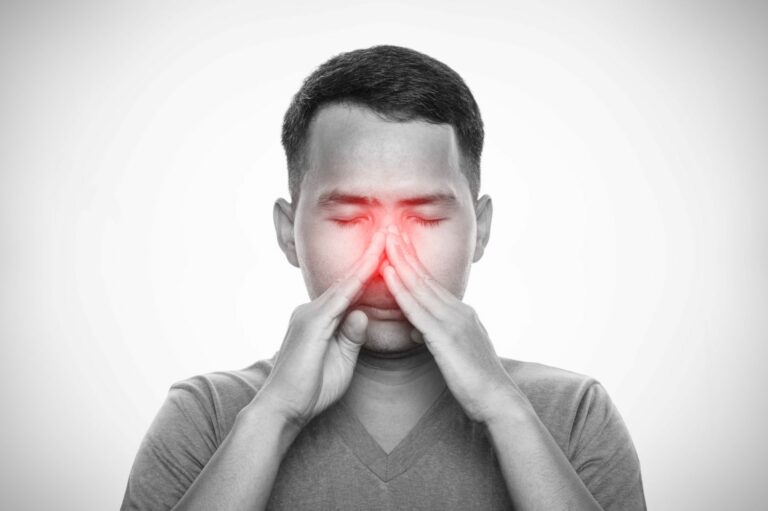
- Depending on which sinuses are infected, you may feel pain or pressure in your forehead, cheeks, ears, or teeth.
- You may have thick, sticky mucus coming from your nose.
- Your mucus may be cloudy, or have a greenish-yellow color.
- Mucus may drip down the back of your throat (postnasal drip), giving you a sore throat and cough.
- Your nose may be stuffed, restricting your breathing.
- Your face may feel tender, especially around the eyes.
Other symptoms
- hoarseness
- fever
- fatigue
- bad breath
- decreased sense of smell and taste
The most common sinus problem
Any infection of your upper respiratory tract can easily spread to the sinuses. The resulting inflammation and pain are called sinusitis. It’s also known as rhinosinusitis. Many people refer to sinusitis as simply ‘sinus’ pain.Your sinuses can become infected by bacteria, a virus, or both. At any given time, millions of people all over the world are suffering from sinusitis.
Acute & Chronic sinus infections
A sinus infection can last from 10 days to as long as 8 weeks. This is called an acute sinus infection.
Sometimes a sinus infection can become chronic, getting better and then worse again, off and on for months.
Chronic sinusitis is medically defined as sinusitis that occurs more than four times a year. If your sinus infection lasts longer than eight weeks, it’s also usually considered chronic.
Chronic sinusitis is one of the most common chronic conditions.
The symptoms of acute and chronic sinusitis are similar. Fever is less likely, except in severe cases.
Factors involved with chronic sinusitis are…
- Viral or bacterial infections
- Fungal infections
- Hay fever or allergies to dust mites, moulds, and so on
- Frequent exposure to cigarette smoke or other airborne pollutants
- Nasal polyps, a deviated septum, or a damaged nasal structure
- Medical conditions such as asthma, hiv, or cystic fibrosis
- Aspirin sensitivity
- Respiratory tract infections
You’re at higher risk for sinusitis if you…
- Have allergies
- Smoke
- Have a weakened immune system
- Have a mechanical problem in the nose, such as a deviated septum
- Have a dental infection
- Spend time in a day care or kindergarten where germs are likely to be present
People often develop sinusitis after they have a common cold. If the lining of your sinuses becomes https://blogpoet.com.ua blocked in a cold, the mucus gets thick and sticky. Your sinuses may not drain properly and bacteria can then build up in the mucus.
Treatment of Sinusitis
- Getting plenty of rest
- Drinking plenty of fluids
- Taking painkillers, such as paracetamol or ibuprofen
Serious sinus infections can spread to the membranes and fluid around the brain and spinal cord. This infection is called meningitis. Other serious infections can spread to the bones, called osteomyelitis, or to skin, called cellulitis.
What should you do if you have Acute Sinusitis
- Try moist heat or steam. You can make a steam inhaler by putting hot water in a bowl and inhaling the steam. To do this:
- Keep at least 8 inches away from the water so that you don’t burn yourself.
- Inhale for about 2 minutes.
- Create an enclosed space for the moist, warm air to collect by draping a towel over your head as you lean over the bowl.
- You can also buy a vaporizer, which creates steam from heat.
Other tips to manage symptoms
- Take over-the-counter (OTC) pain medication to ease headaches.
- Try OTC drugs such as guaifenesin (Mucinex) that thins your mucus, which can help to pass the mucus and lessen congestion.
- Try acupuncture; there’s some evidence that it’s useful for sinus-related symptoms.
Chronic sinusitis care tips
Find and treat the condition that’s causing it. If another condition is associated with your chronic sinusitis, get treated for it and stick to your medications or treatment plan. Try treatments or management plans if it’s from allergies. See an allergy specialist to identify and have ongoing treatment for allergies.
Keeping sinuses healthy
You can take some steps to help keep your sinuses healthy and avoid sinusitis:
- Keep your hands clean.
- Maintain moisture in your nose and sinuses.
- Drink plenty of fluids to keep your mucus thin.
- Use a humidifier in the winter season, when the air tends to be drier.
- Use an OTC nasal saline spray to irrigate your nose.
- Keep the dust level down by dusting and vacuuming often, especially in the bedroom.
The good news is that if you’re otherwise healthy and your sinusitis is caused by a virus, it’s likely to resolve on its own within 7 to 10 days.